Sunday, 9 February 2014

While researching the colours used in the world of horse racing, I have noticed that the two most common colours are a turf-like green and a beige-gold. Perhaps they are meant to represent the turf a horse runs on and the riches it could win?


Thursday, 6 February 2014

And here are some screenshots from some of their websites:


Below are logos from some of the National Hunt racecourses in the UK. I have decided to look at and compare their colour schemes/themes.


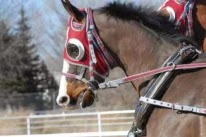
There are all kinds of headgear that National Hunt horses can wear, and all have their specific benefits.

B = Blinkers. Used to keep the horse looking forwards and concentrating on the job in hand:


V = Visor. Visors are similar to blinkers, only they have a slit at the back that lets more light in:


E = Eye Shields. Eye shields are, again, similar to blinkers, only they use mesh instead of a solid material:


H = Hood. Hoods cover the horses ears and are designed for horses that are affected by noise:


P = Cheek Pieces. Cheek Pieces restrict the horses rear vision and encourage concentration:


T = Tongue Strap. A tongue Strap stops the horses tongue from lifting and restricting the airflow during a race:



There are two types of jumps in the world of National Hunt Racing: Hurdles and Steeplechase fences.

Hurdles are relatively small and are usually the jumps that young or inexperienced horses start over:


The next size up are steeplechase fences, which are usually for more experienced horses:


There are even bigger, wider steeplechase fences that are used for more experienced jump horses and jockeys:


And finally, there are enormous steeplechase fences which are covered with up to 3 foot of spruce to make them seem even bigger. These fences are reserved for the best and most experienced horses and jockeys who are able to jump into the Grand National:


The BBC ran an article in 2008 about Flat racing vs National Hunt racing. They asked the two leading jockeys from each sport respectively to give their opinions:

http://news.bbc.co.uk/sport1/hi/other_sports/horse_racing/7436301.stm


Love The Races also ran a similar article  called Flat vs Jumps:

http://www.lovetheraces.com/features/flat-vs-jumps/


"Good jumpers: Jumpers come from a variety of backgrounds but are traditionally more robust types, bred to start over small jumps (hurdles) and eventually graduating to the larger steeplechase fences. They are generally expected to peak from between seven and 10 years of age and compete over longer distances, starting from two miles but stretching as far as four and a half miles in races such as the Grand National at Aintree (Saturday 6th April). As they tend to carry on for longer than Flat horses, jumpers are invariably neutered (or gelded) to keep their minds on the job in hand."

"Flat horses: Flat racing, on the other hand, is for a sharper, more precocious individual and they begin their racing careers at the age of two. There is more prestige on the Flat and the very best, like a Derby winner, become so valuable they can be retired for breeding as early as at three years of age. These horses can earn up to £100,000-a-time for coverings (matings)! It's even been estimated that the great Frankel could command a fee at stud of a whopping £200,000! Speed is of the essence, with the shortest races held at five furlongs (1km), but many will run over further than two miles and can also try their hand at jumping."
This video from Horse Racing Ireland gives an insight into what makes a winning racehorse:


And this article from Love the Races shows what leading female jockey Hayley Turner personally looks for in a horse:

http://www.lovetheraces.com/new-to-racing-/what-to-look-for-in-a-superstar-racehorse/


1. The body "I like to see a good broad chest, and with a horse’s back end you want to see the muscle. If you are looking at two-year-olds that haven’t fully matured, their hind quarters are always higher than at the front end. That is a sign of weakness. They will level out in time.” 

2. A Gleaming Coat "This is an important one. If they’ve got the shine – a good skin, a good coat – that’s the health inside them coming out. You wouldn’t want them to be too woolly at this time of the year.” 


3. Sweating "It’s not unusual if a horse is sweating on its neck, especially on a warm day. But if they’ve got sweat dripping off them, you wouldn’t want that – boiling over before a race. That’s a sign the horse is overwhelmed by the whole atmosphere." 


4. The Head "The size of a head is only relevant if they’rein a photo-finish! The eyes want to be alert.Big ears are a sign of a genuine horse, and big nostrils are always a good thing (to get lots of air into the lungs).”